

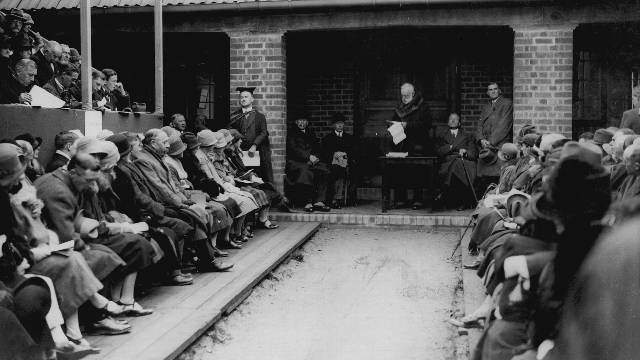
 The National Institute of Poultry Husbandry at 100 - rediscovering an eye witness account
To mark the Centenary of the opening of National Institute of Poultry Husbandry at Harper Adams, we’re sharing a contemporary acc …
Posted 3 November
Making beef production more planet-friendly
5 March 2020

Last week we blogged about why we won’t be banning beef from our campus catering outlets menus. This week beef is on the blogging menu again – as we catch up with Nicky Naylor, beef and sheep research coordinator, to learn more about the Animal Production and Science (APAS) unit trials.
“There are three sectors in the beef industry,” says Nicky. “There’s the intensive system which is typically a 12-month finish in a shed, where the cattle will be fed a concentrated diet or a high energy silage.
“On the flip side of this is extensive farming, which is often used for UK native breeds like the Aberdeen Angus. They are typically grass reared with a 24 to 30 month finishing system. They will be indoors at some points in the year, a period referred to as ‘store’.
“In between this is a semi-intensive system with an 18 to 20 month finishing system. Different breeds within the sector will be more suited to different systems which is why we have trialled different foods and conditions both outside and in store.”
Each of the systems have been shown to have a different effect on meat cuts at the end of the cycle.
Harper Adams, Nicky explained, is currently working with AHDB on a semi-intensive system with dairy-bred beef cattle, the production of which has a lower carbon footprint than suckler-bred beef cattle. The calves that Harper rear are a by-product of milk production and so, instead of breeding specific suckler cattle and increasing carbon emissions, we work with a breed that has multiple purposes.
“Our current 18-month system has seen us move away from food that had a concentrated base system which was high cost and cereal driven, towards a more efficient and sustainable crop,” Nicky explains. “We are trialling red clover silage, a homegrown crop that minimises our food miles.”
“By growing and feeding high protein and energy forages to finish our beef cattle, we are reducing the amount of cereals they are fed and eliminating the use of protein supplements such as soya bean meal.”
While this work is making Harper meat more planet-friendly, research continues to be undertaken to identify and develop systems that are even more sustainable.
James McCaughern, Lecturer in Beef Systems, commented: “Our next beef project will be even more planet friendly. We’re going to be changing the breed of our cattle and work with dairy cross Aberdeen Angus calves. They will go onto a 24-month finishing system and be finished on grass which will be a fantastic ‘carbon sink’.”
Want to learn more about sustainable Harper? Click here.
Start your career in sustainable food production by visiting our open day on March 21.
Related Posts
The National Institute of Poultry Husbandry at 100 - rediscovering an eye witness account
To mark the Centenary of the opening of National Institute of Poultry Husbandry at Harper Adams, we’re sharing a contemporary acc …
Posted 3 November
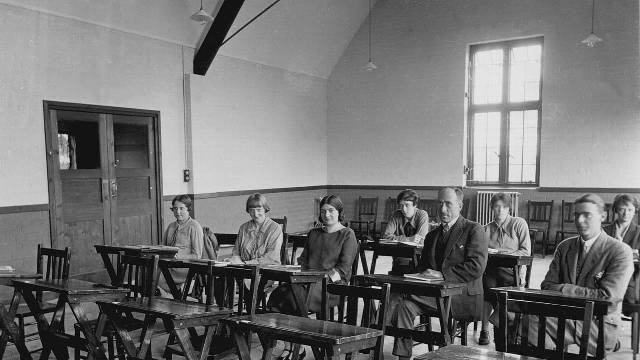 'More than 100 years of expertise' - a brief history of poultry at Harper Adams
Dr Stephen Mansbridge is Reader in Animal Science and Bioinformatics at Harper Adams University as well as Director of the Animal Science Re …
Posted 3 November
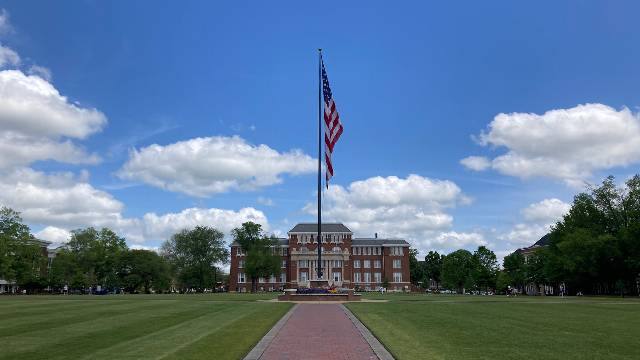 Agricultural Autonomy Institute joins Harper Adams University's 125th anniversary celebrations
A leading American expert in agricultural autonomy has paid tribute to Harper Adams University as it marks its 125th anniversary.Dr Alex Tho …
Posted 22 October
 Sky's the limit: Helen joins MP's fundraising parachute jump
A charity skydive by a Harper Adams University Business Development Consultant has helped raise more than £16,000 for a new cancer cen …
Posted 21 October